
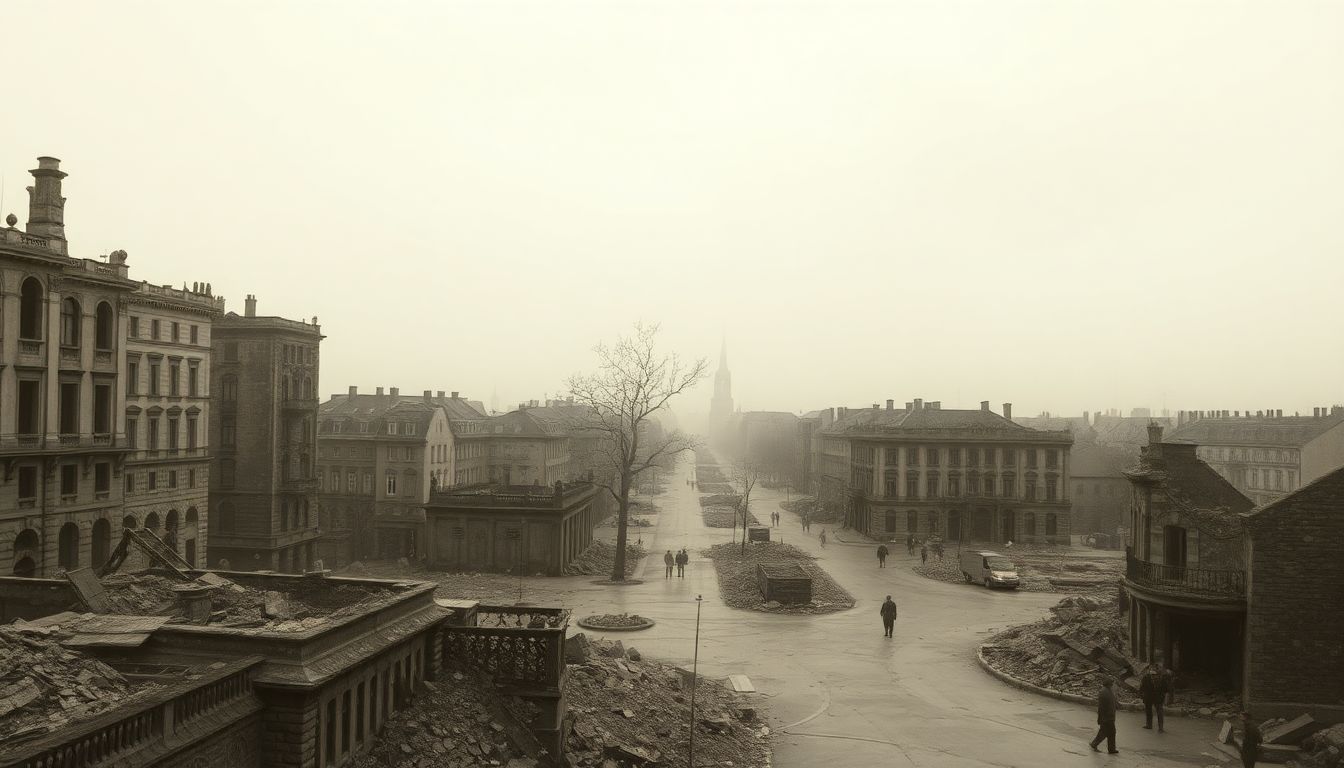
The Global Impact of World Wars: How Two Conflicts Shaped the Modern World
Imagine a world where almost every nation is at war. Millions dead, cities destroyed, and the very map of the world redrawn. The World Wars were like that. World War I and World War II changed everything. The impact of these wars is still felt today.
These huge conflicts reshaped global politics, economies, and how people lived. Even with the terrible human cost, these wars pushed big changes. These shifts changed international relations and technology. Society also changed in ways we still see. The World Wars changed everything.
The Seeds of Destruction: Understanding the Causes of World War I and World War II
Both World War I and World War II had different causes. Still, you can find similarities. Old tensions and new problems caused the wars. Let's peek at what led to the biggest conflicts in human history.
The Tangled Web of Alliances and Imperialism in World War I
Before World War I, Europe was a mess. Alliances tied countries together. If one country was attacked, others had to help. Germany, Austria-Hungary, Great Britain, France, and Russia all played a role. Imperialism also caused tension. Nations wanted to control more land and resources. All these things created a dangerous situation.
The Rise of Fascism and the Failures of Appeasement in World War II
After World War I, fascism grew in Germany and Italy. Fascism is a political idea that puts the nation above all. Leaders like Hitler in Germany wanted to expand their power. Other countries tried to avoid war by giving in to Hitler's demands. This was called appeasement. It didn't work. The Treaty of Versailles also hurt Germany. It made them angry and resentful, and this contributed to a new war.
From Trenches to Total War: Key Events and Turning Points
World War I and World War II involved fighting on a huge scale. These conflicts changed warfare itself. They also reshaped the world. Let's look at some major events.
The Western Front and the Eastern Front in World War I
World War I had two main areas of fighting. These were the Western and Eastern Fronts. The Western Front was a long, brutal stalemate. Soldiers fought from trenches. Key battles included the Battle of the Marne, Verdun, and the Somme. The Eastern Front saw more movement. Russia fought against Germany and Austria-Hungary. The Brusilov Offensive was a major Russian attack.
Blitzkrieg and the Global Expansion of World War II
Germany used a new strategy called Blitzkrieg in World War II. It means "lightning war." They used fast tanks and airplanes to quickly defeat enemies. The war spread across the globe. Japan attacked Pearl Harbor, bringing the United States into the war. Key events included the Battle of Stalingrad and D-Day, when Allied forces invaded France.
Reshaping the World Order: The Political and Economic Consequences
The World Wars changed the world's political and economic structure. Empires collapsed. New nations appeared. International organizations formed. The old order was gone, replaced by a new reality.
The Collapse of Empires and the Rise of New Nations
After the wars, European empires broke apart. The Austro-Hungarian and Ottoman Empires disappeared. New countries emerged in Eastern Europe, the Middle East, and Asia. The British Empire also began to fall apart. Many colonies gained independence.
The Bretton Woods Agreement and the Dawn of the American Century
After World War II, countries met at Bretton Woods. They created a new economic system. The US dollar became the world's reserve currency. This gave the United States a lot of power. The United States became a superpower. Its influence was felt everywhere.
A Society Transformed: The Social and Cultural Impacts
The World Wars changed more than just politics and economics. They impacted society and culture. Gender roles shifted. Art changed. How people remembered the wars shaped the future.
Women in the Workforce and Shifting Gender Roles
During the wars, women took jobs that men usually did. In the United States, women like "Rosie the Riveter" worked in factories. In Britain, women worked in many war industries. This changed how society viewed women. They proved they could do more than just housework.
The Lost Generation and the Rise of Modernism
The wars had a big impact on art and literature. Many artists and writers felt lost and disillusioned. They were called the "Lost Generation." Modernism became a popular art movement. Artists like Ernest Hemingway, T.S. Eliot, and Pablo Picasso tried new ways to express themselves.
Conclusion
The World Wars caused terrible destruction. Yet, they also led to big changes in politics, technology, and society. The wars still affect us today.
The world wars taught us how important international cooperation is. We need to work together to avoid future conflicts. The legacy of these wars reminds us to strive for peace. We must avoid the mistakes of the past.



![The Top 10 Most Powerful Countries in the World Right Now [2025 Rankings]](https://lh3.googleusercontent.com/blogger_img_proxy/AEn0k_u-NDxZX6zapwHLcI7LSi82F-9q7wDEATALV31tg9Rm-d8L8GWZYhOHi5he4h_A4mh2C4zTF5Z5TxAT4ffsd0AJJ1gQ467z-gSn1yhPaAtTf9FnYPLNWEm8xGkj24SkXXEgYjdHvO5EmQuR8O1wjsiT3NXAeJTrdRXqlapJRtYr6oWhKxpKmqmVhuIH84HvaevJxsQ=w72-h72-p-k-no-nu)


0 Comments